Early Hiring
Part of Employee onboarding operations
Assigning an onboarding contact and first deliverables
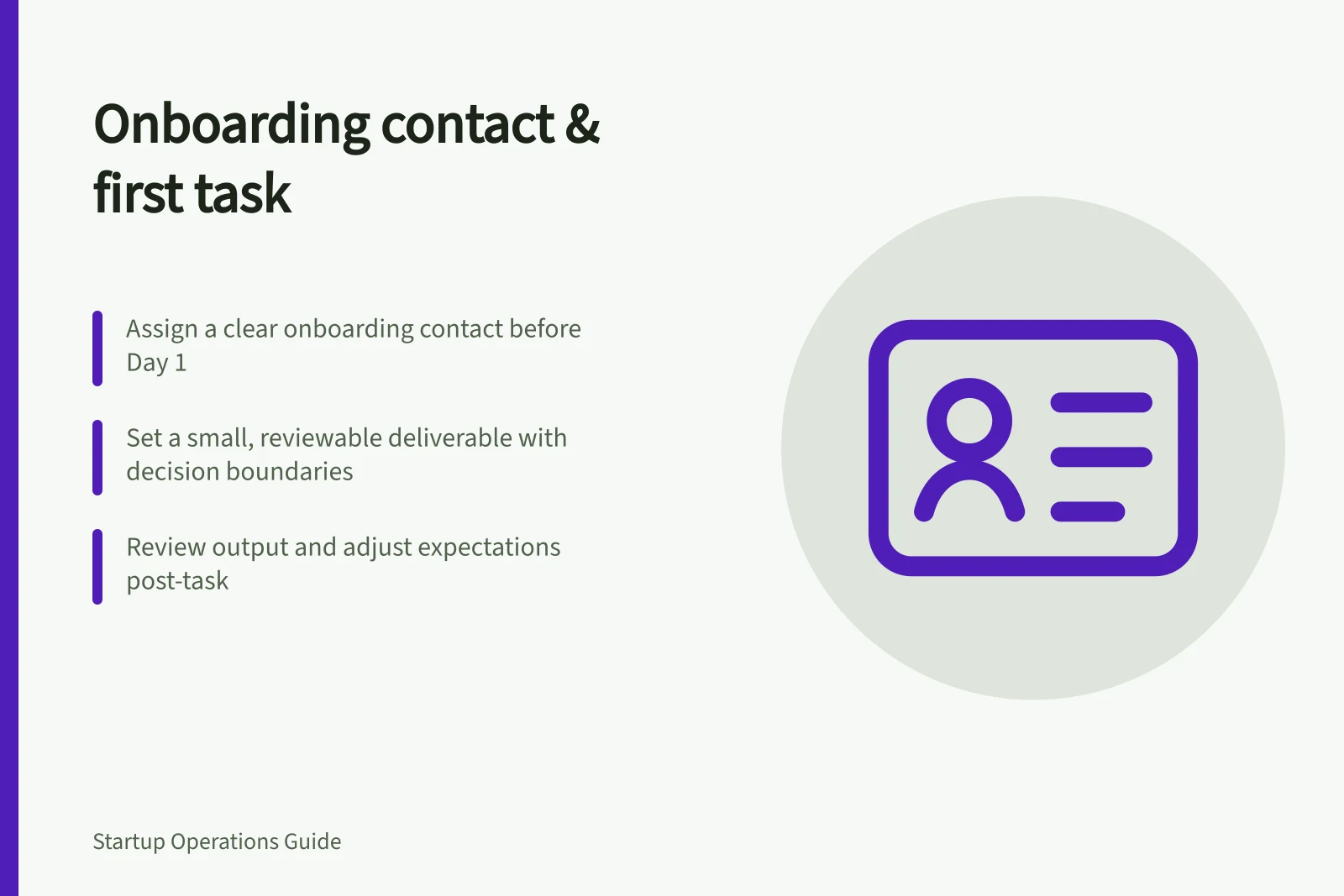
Give a new employee a clear contact and a first piece of work with an expected output, decision boundary, reviewer and feedback point.
Give a new employee a clear contact for everyday onboarding questions, and a manager accountable for the work they will learn to do. Agree a small first deliverable with an expected output, a reviewer and a point at which to ask for help.
Make the contact’s role clear
The contact helps the employee find people, information and answers: where work is assigned, how to raise a blocker and whom to approach about a system or workplace question. This may be the manager or a colleague with time to help. If a colleague takes the role, the manager still owns priorities, expectations and feedback.
Tell the employee the contact’s name and preferred channel before their first day. Allow time for an introduction and follow-ups, and name an alternative for absences. Explain which questions go directly to the manager, such as changed duties or competing deadlines.
The contact can explain an established process or direct the employee to its owner. They should not have to guess an employment condition, approve access outside their authority or invent a policy.
Choose a first deliverable that teaches the work
Select an output the team needs and can review before it has consequences beyond the employee’s authority. Define it in ordinary language:
- Result:
- What should exist when the work is done?
- Starting point:
- Which example, procedure or person can the employee use?
- Decision boundary:
- What may they decide, and what needs approval?
- Review:
- Who will look at the work, and when?
- Help trigger:
- When should they stop and ask rather than continue with an assumption?
For example, a new operations coordinator could draft a summary of an internal request for the manager to check before anyone acts on it. The task lets the employee practise the workflow and gives the manager a chance to see where the instructions need work.
Do not use completion speed as the only measure. A first task may reveal missing access or an outdated procedure. Assign that blocker to its owner and adjust the task.
Close the loop after the first attempt
Ask the employee to show the output and identify where they had to make assumptions. Explain what is ready, what needs changing and why. Agree the next task or training step, and keep a brief record of the revised expectation.
If the contact repeatedly answers the same question, add the answer to the relevant onboarding material. If priorities change, give the employee a new result and review point.