Operating Cadence
Part of Founder decision-making
Recording decisions that are likely to be revisited
Choose which founder decisions need a record, capture their reason and review trigger, and show clearly when a later decision replaces them.
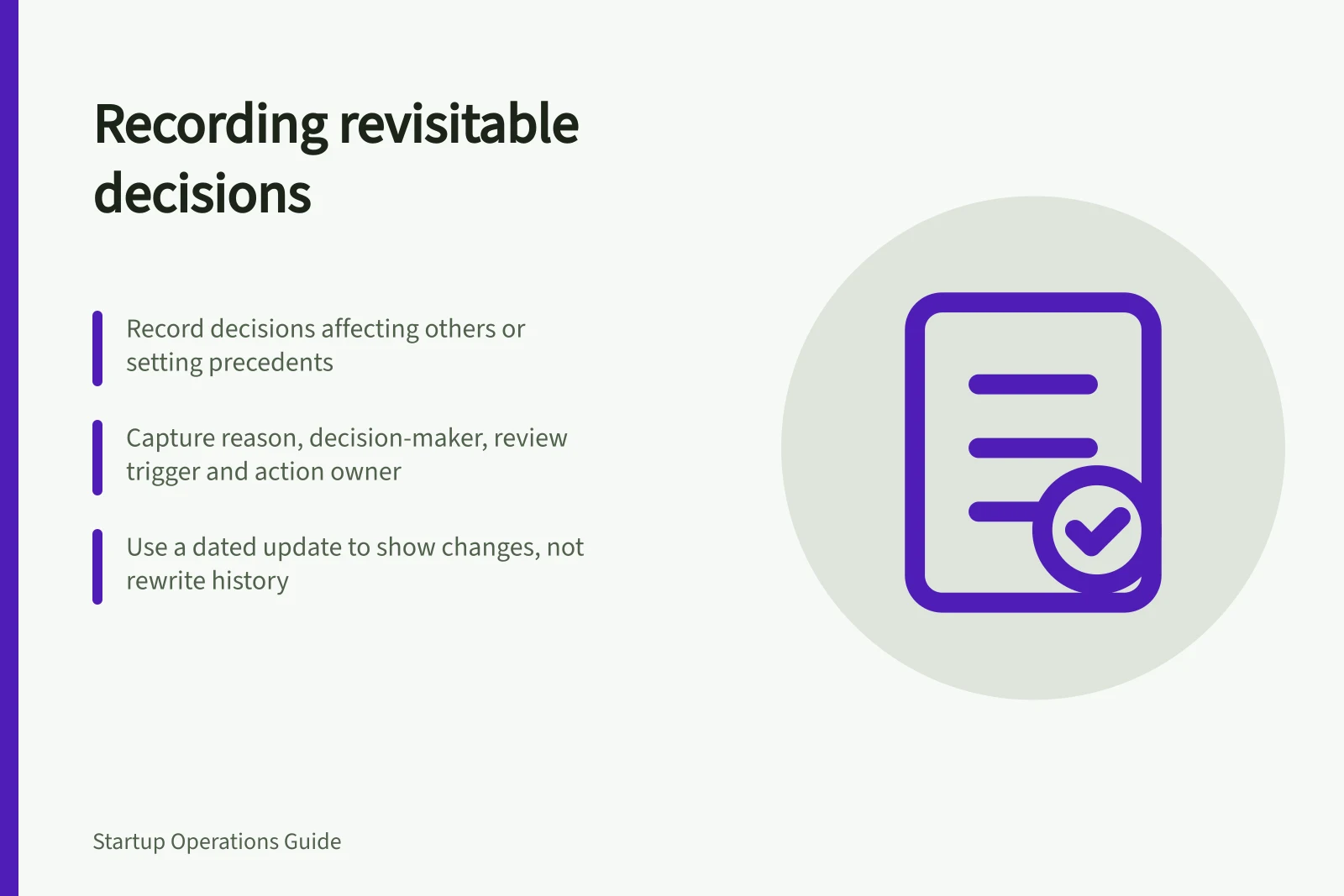
Record a decision when someone may later need to know why it was made or whether it still applies. Capture the question, choice, reason, authorised decision-maker and review condition while the context is fresh. The record should help the next reader act, not recreate every conversation.
Decide what needs a record
A routine choice within an agreed boundary may need only a task update. Keep a fuller record when a choice affects other people's work, rests on an uncertain premise, sets a precedent or would be costly to reconstruct. Repeated debate about the same question is another reason to make the answer findable.
Mark whether the choice is proposed, approved or awaiting an approval. A discussion note must not look like authority to act.
If an Australian company decision requires a resolution, follow the applicable company process and keep its required record. An internal note serves a different purpose.
Capture the reason a future reader will need
| Field | What to write |
|---|---|
| Question and status | The choice and whether it is proposed, approved or superseded. |
| Decision-maker and date | Who was authorised to decide, and when. |
| Options and reason | The serious alternatives, chosen option and main trade-off. |
| Evidence and assumptions | What was known, estimated or still untested. |
| Consequence and action owner | What changes in the work and who will carry it out. |
| Review trigger | A date, observation or change that warrants another decision. |
Store the entry where its intended readers can find it. Restrict sensitive customer, staff or commercial details to people who need them; a decision note does not need to duplicate every underlying record.
A hypothetical team approving a limited service package could note that delivery capacity is still an estimate, name who will check it before work is accepted, and state that a different finding reopens the offer decision. Approval alone would not establish that the package works.
Show which answer now applies
At the trigger, compare new information with the original reason. Add a dated check if the choice still stands. If it changes, create a clearly dated replacement and mark the earlier entry as superseded.
Preserve the earlier reason rather than rewriting it to appear to anticipate later evidence. Tell affected people which position applies.
This record concerns the continuing reason for a choice. A meeting summary can separately capture the meeting's other discussion and actions.