Operating Cadence
Part of Startup meeting and reporting routines
Writing a useful decision summary after a meeting
A meeting summary should let an absent teammate know what was decided and what happens next.
A meeting summary tells an absent teammate what was decided and what happens next.
A transcript or chronological recap rarely does that.
Write the decision record before memories diverge.
Best Practices from Leading Tools and Guides
- 3xAction items with owners are completed faster — Teams using named owners see higher accountability (Zoom, 2026)
- 60%Ambiguous ownership causes % of task delays — Specific assignments improve delivery rates (Spinach.ai, 2026)
Capture the choice and its basis
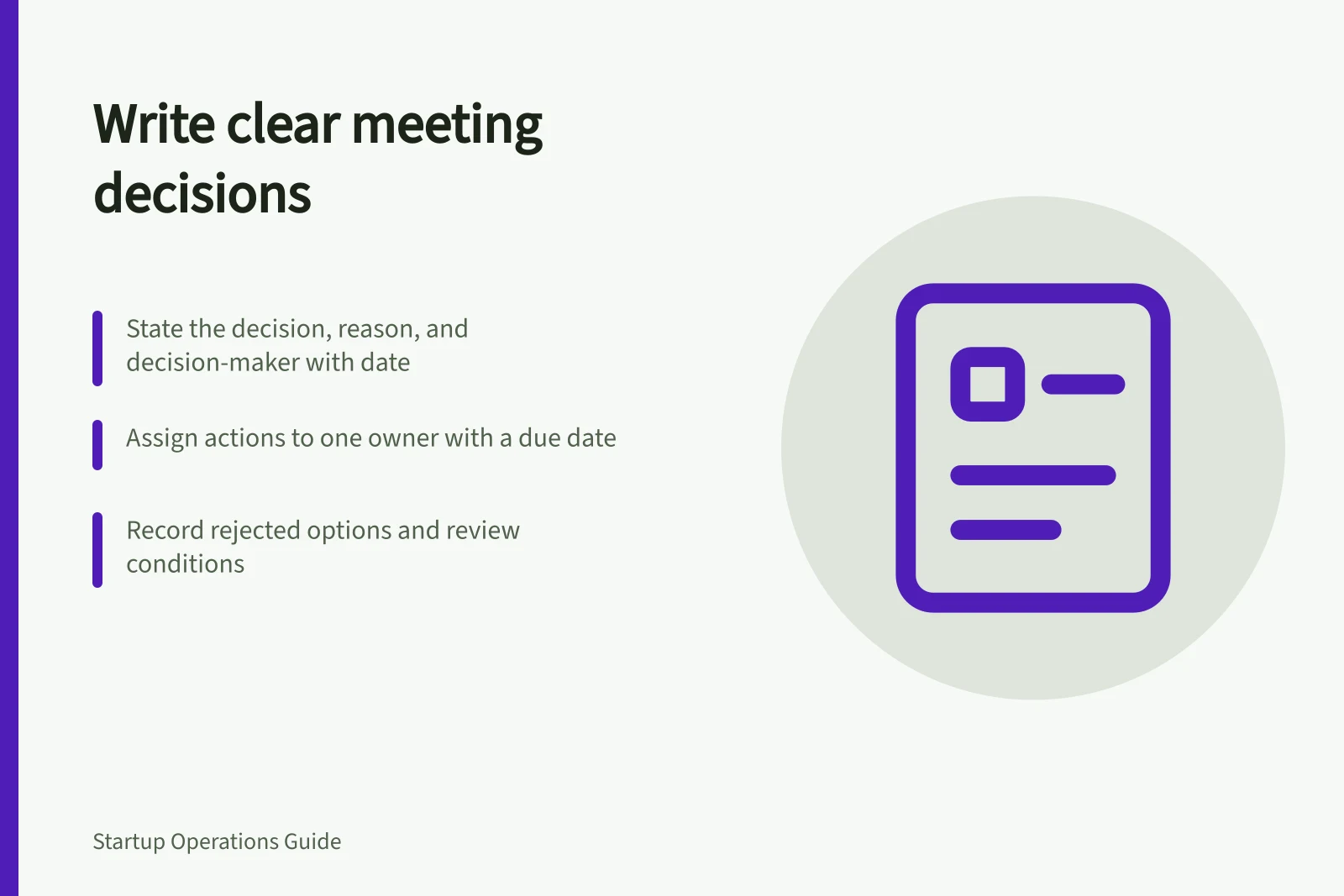
For each decision, state the question, chosen option, reason, decision-maker and date. Note an important alternative that was rejected and the condition that would cause a review. Distinguish a final decision from a proposal awaiting approval. Atlassian's meeting-notes template includes explicit decision and action records; neither should be buried inside general discussion notes.
Then list actions with one owner and a due date. “Marketing and product will follow up” is ambiguous. Name who will produce what, who will review it and where the result will be stored. Record unresolved questions separately, with the evidence needed and the person obtaining it.
Share it with the right people
Send the summary to participants and affected colleagues who were not in the room. Invite prompt correction of factual errors. Do not reopen the whole debate through a vague request for feedback; specify what is still open. For sensitive decisions, use an access-controlled location rather than forwarding details widely.
At the next meeting, start with the prior decisions and actions. If the same topic returns, check whether new evidence changes the agreed condition for review.