Operating Cadence
Part of Startup operating systems
Choosing a weekly operating rhythm
Choose a weekly startup cadence for updates, decisions and escalation, then adjust it to the pace of the work.
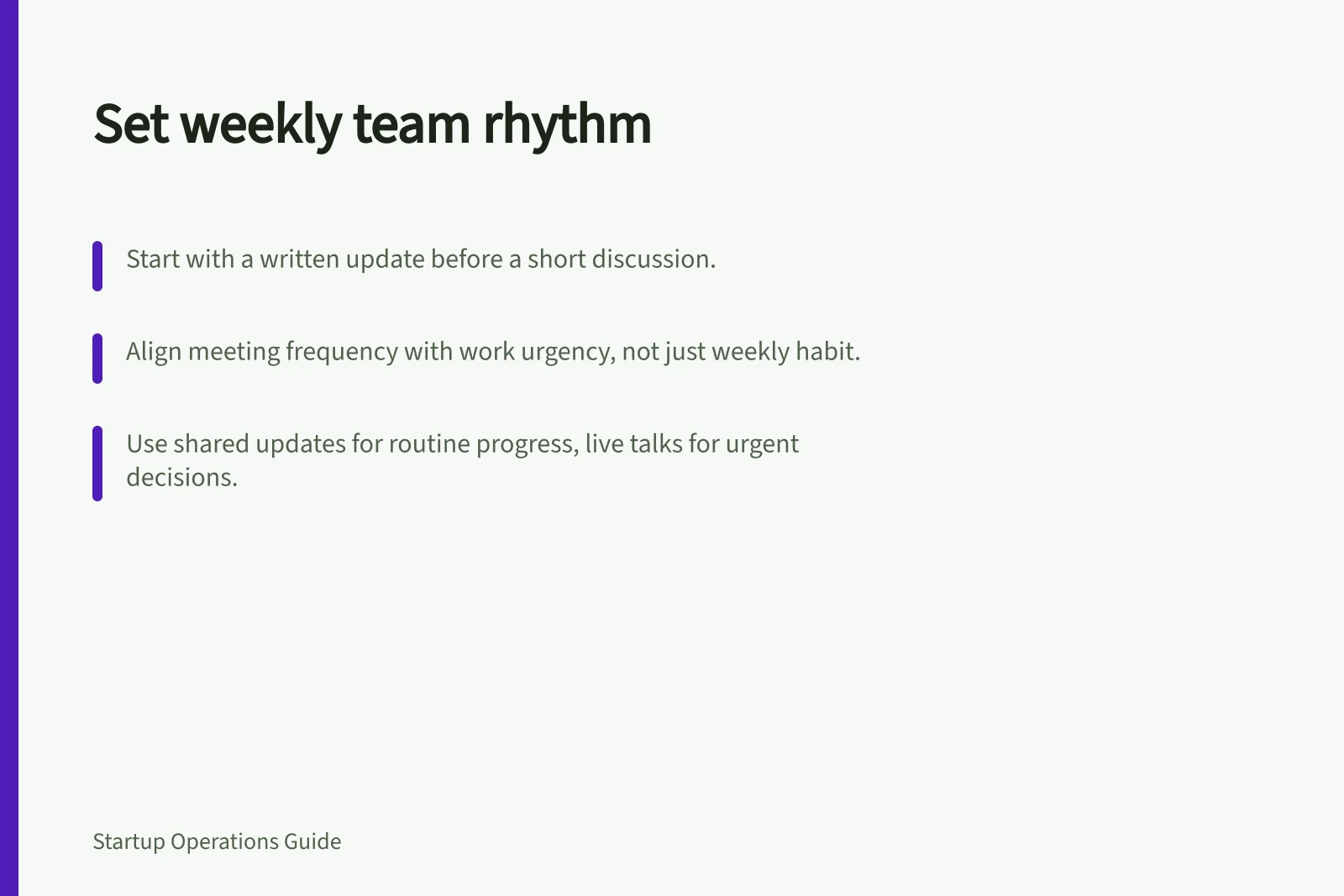
Choose a weekly operating rhythm by asking when information must be available and when people need to decide together. A small team can start with a written update before a short discussion. Change the frequency when the work demands it; a calendar pattern has no value on its own.
Identify the decisions the week must support
Look at recent delays and surprises: someone needing a customer answer before the next meeting, work waiting on a founder's approval, a risk emerging too late to change the plan. These cases reveal the timing your rhythm needs.
Write down the recurring information people need: work due soon, commitments at risk, dependencies and requests for a decision. Decide which items can be read in a shared update and which require a conversation. Routine progress can often be posted; competing priorities or a disputed trade-off may need people together.
Build a small cycle
A team could use these three functions:
- Set direction:At the start of the working week, name the work needing attention and the constraints that might change it.
- Escalate between checks:Give people a named route for problems that cannot wait for the next scheduled review.
- Close the loop:Record what changed, what remains open and who owns the next action.
These functions do not each require a meeting. A shared written update may cover the first and last. Use live time when a decision needs joint discussion. If the founders already coordinate throughout the day, another status meeting may add little.
Keep the update easy to prepare. A compact format is: current commitment, change since the last update, blocker or decision needed, owner and next date. Provide enough context to act without copying an entire task board. Agree when the update is due so colleagues know whether they are looking at a current view.
Match frequency to the work
Weekly is a starting interval, not a promise that every issue can wait seven days. A time-sensitive launch might justify a temporary daily check. Stable, independent work might need only a written weekly update and a live discussion when an exception appears. Set a point to review any extra check after the busy period.
If the team spans locations or work hours, agree on a window for live decisions and a route for pressing issues outside it. State what counts as pressing. Otherwise, a message marked urgent can demand attention without telling anyone what decision is needed.
Check whether the rhythm helps
After a few cycles, ask whether the team learned about blockers in time, made the necessary decisions and avoided repeating status aloud. Look at actions left open from one week to the next. If people still wait on a founder, changing the meeting time may not solve the authority gap.
Remove a touchpoint that produces no useful decision or shared understanding. Add one to solve an observed coordination problem. Choose the lightest rhythm that lets the team see current commitments and act on issues in time.
Key Metrics to Evaluate Your Weekly Rhythm
- Blockers identified in time
- Yes/No
- Decisions made collaboratively
- Yes/No
- Actions carried over from week to week
- Number