Founder Reporting
Part of Startup meeting and reporting routines
Keeping investor updates separate from internal task reporting
An investor update and an internal task report answer different questions.
An investor update and an internal task report answer different questions. The task report helps a team coordinate work. The investor update helps an outside reader understand progress, risk, cash needs and where their input could matter.
Copying a project board into an investor email usually obscures those decisions.
Investor Update vs Internal Task Reporting: Key Differences
- Purpose
- Inform external stakeholders about progress, risk, cash needs and strategic direction
- Audience
- Investors, board members, external partners
- Focus
- Outcomes, milestones, risks, funding needs, strategic decisions
- Content Style
- Summarised, contextual, forward-looking with clear asks
- Internal Reporting Use
- Coordinate team work, track tasks, document detailed progress
- Typical Format
- Project boards, task lists, individual tickets, tentative hypotheses
Translate activity into outcomes
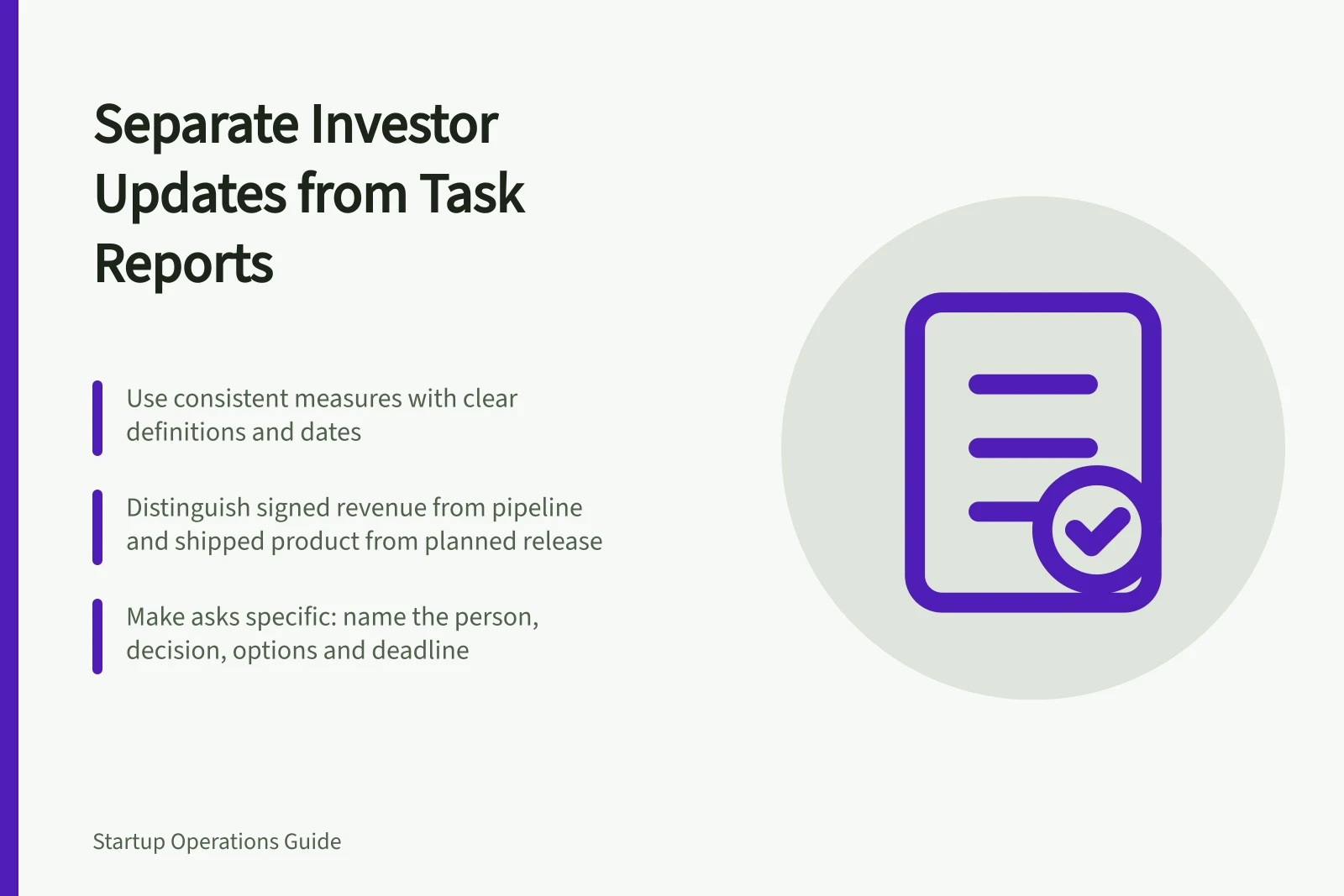
Start with the goals you previously communicated: what changed against them, and why? Use a small number of consistent measures, with definitions and dates. Explain a missed target plainly, including your response.
Distinguish signed revenue from pipeline, a shipped product from a planned release, and measured retention from a preliminary cohort. If a definition changes, show how that affects the comparison.
Internal reporting can retain individual tickets, tentative hypotheses and detailed owners. Summarise those into milestones, material risks and requests for help in the external update.
A routine written update is useful for team awareness, as Atlassian's weekly-update play illustrates. It does not by itself supply investor-level context.
Creating an Effective Investor Update
- Revisit Prior GoalsReview previously communicated objectives and assess what has changed
- Define Key Metrics ConsistentlyUse agreed-upon measures with clear definitions and dates (e.g., signed revenue vs pipeline)
- Explain Deviations HonestlyState if targets were missed, include reasons and response actions taken
- Translate Tasks into OutcomesConvert internal tickets and hypotheses into milestones, risks, and requests for help
- Preserve Historical ContextKeep prior updates accessible so changes over time are transparent
Make the ask specific
If you want an introduction, name the type of person or organisation and why it would help. If you need advice, state the decision, options and deadline.
A generic request for “any thoughts” is difficult to act on. Keep sensitive customer and personnel details within the appropriate confidentiality boundaries.
Before sending, check figures against the source systems. Have a second person review claims that will be relied upon.
Preserve the previous update so readers can see what actually changed. The goal is an honest account of business direction, not a polished inventory of every task completed.
Before Sending an Investor Update: Review Checklist
- Are sensitive details protected?Yes – customer names, personnel info kept confidential
- Have figures been verified?Yes – cross-checked against source systems like CRM or financial dashboards
- Has a second person reviewed claims?Yes – especially for data relied upon in decision-making
- Is the previous update available for reference?Yes – maintained in a shared repository or email thread