Founder Reporting
Part of Startup metrics and management information
Reporting uncertain forecasts honestly
Present startup forecasts with dated actuals, explicit assumptions, alternative cases and clear decision points.
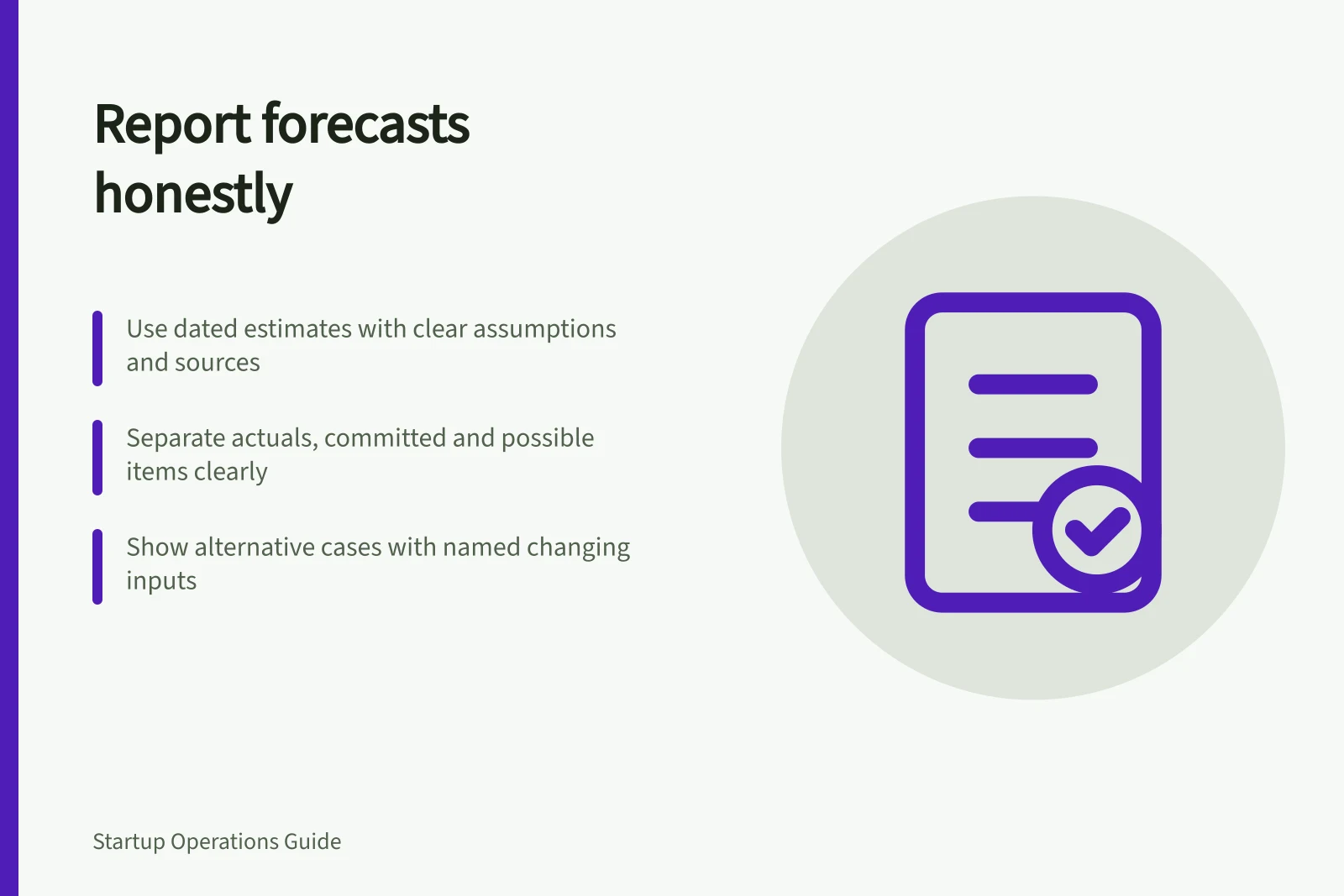
Report a forecast as a dated estimate built from visible assumptions. Separate actuals from committed and possible items, then name the uncertain input that could change the decision.
A single figure without its basis can make a tentative outlook look settled.
State the question and cut-off
Start with the decision the forecast supports: accepting a commitment, changing spending or preparing for possible demand. State the period covered and the date the inputs were last checked. Keep actual results through the cut-off separate from later estimates.
For each material input, record the amount or workload expected, timing, source, owner and uncertainty. An invoice may establish an amount due, not the day it will be paid. An opportunity under discussion may belong in a possible-demand case, but should not appear as accepted work. State whether relevant financial figures include or exclude GST.
Show cases with changed assumptions
A working case can use the team's best-supported assumptions. Add a cautious case for an uncertainty that could change the decision, such as a later receipt or delayed customer start.
An upside case can show what extra work would require if it materialised. Name the assumptions that change in each case. A label such as “worst case” can imply that every adverse outcome has been modelled when it has not.
In the forecast pack / Reader should see
- Actual to date
- Source record and cut-off date
- Working case
- Material assumptions and their basis
- Alternative case
- Which inputs change and why
- Decision point
- What action follows if an input is confirmed or missed
These cases help decisions; they are not measured probabilities. Do not attach a percentage chance without a defensible method and evidence for it.
Forecast Cases: Working, Cautious and Upside Scenarios
- Working CaseBest-supported assumptions based on current commitments and known inputs
- Cautious CaseDelayed customer start or later receipt of payment – impacts staffing and cash flow
- Upside CaseHigher demand than expected; requires additional resources and support team scaling
Put uncertainty beside the conclusion
Suppose a hypothetical startup expects more support requests after a product launch. Its report should distinguish requests already received from those estimated using a stated assumption about launch timing and likely demand. If a later launch or higher volume would change the staffing decision, show that case and name who will check the input. The example predicts no actual launch outcome.
A scenario may include an unconfirmed hire, customer start or supplier date. Keep its conclusion conditional on that event. Do not carry an optimistic assumption into the next forecast without explaining the new evidence.
Key Elements in Honest Forecast Reporting
- Actuals to Date
- Source record and cut-off date included
- Working Case Assumptions
- Clearly stated basis and ownership
- Alternative Case Drivers
- Identified changes in input and reason for change
- Decision Point
- Action if key assumption is confirmed or missed
Compare the forecast with what happened
At the next reporting point, replace elapsed estimates with actuals. Record whether the main difference arose from timing, volume, price, scope or a missing item. Preserve the dated prior forecast so readers can distinguish a changed business position from a changed assumption.
If material uncertainty prevents a useful estimate, state what cannot yet be estimated, why it matters and when the next evidence is expected. The reader should be able to identify the assumption driving the decision and who will check it.