Founder Reporting
Part of Scaling startup operations
Deciding when a founder should delegate an operating role
Identify recurring founder bottlenecks, define a usable mandate and check whether an operating role can move to another owner.
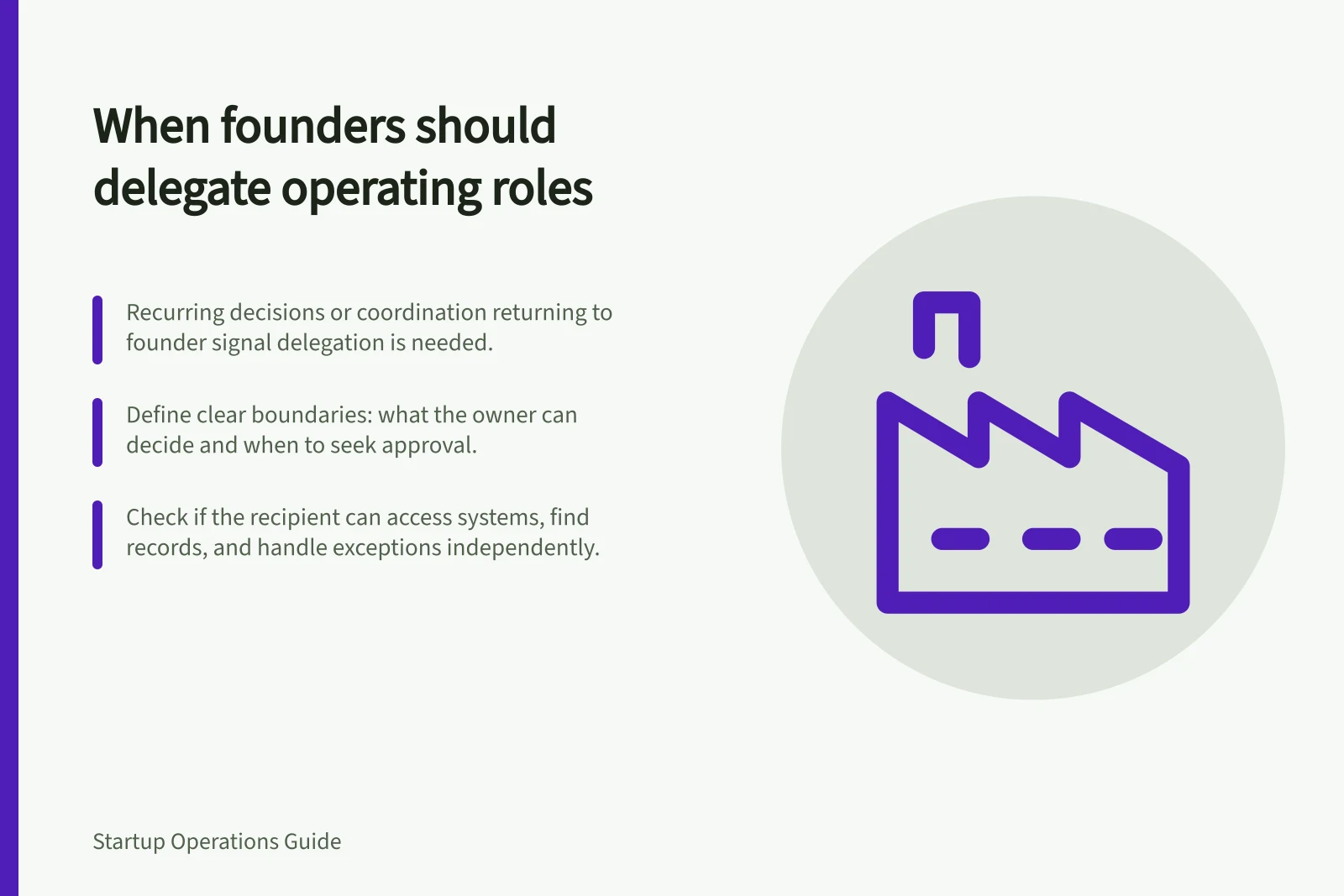
A founder should consider delegating an operating role when recurring decisions or coordination keep returning to them, another person can own a defined stream of that work, and the founder can state what authority and oversight remain. A crowded calendar alone does not show that a whole role is ready to move.
Identify the work that keeps coming back
Review recent cases. What did the founder decide, approve, chase or correct? Separate routine operating choices from exceptional customer promises, spending commitments and company decisions. Note why each case reached the founder: no owner, an unclear authority limit, missing information or a judgement that genuinely needs them.
A suitable candidate is a recognisable stream of work with repeated inputs and an observable result. If cases differ substantially, delegate a narrower part first, such as gathering facts or proposing an option. Moving ownership will not supply a missing specialist skill.
Routine vs Exceptional Work: What Should Founders Handle?
- Routine Operating Choices
- Recurring decisions like scheduling, standard onboarding, or internal coordination
- Exceptional Decisions
- Customer promises, major spending, strategic changes, or high-risk commitments
Define a mandate someone can use
- Which work enters the role, and where is it recorded?
- What may the owner decide without asking?
- Which change to cost, scope, a customer promise or risk needs approval?
- Who supplies information and covers an absence?
- What will the founder review, and how will an exception reach them?
For example, an owner might coordinate accepted customer setups and resolve routine scheduling within confirmed capacity while seeking approval before changing an agreed customer date. The business must set the actual boundary against its commitments and approval rules.
If the founder is a director of an Australian company, ASIC states that directors are responsible for overseeing the company's affairs and making sure it meets legal obligations. Set up information and review so the director can carry out that oversight.
Key Responsibilities of a Company Director in Australia
- Oversight of company affairs
- Required under ASIC regulations
- Compliance with legal obligations
- Including tax, superannuation, and workplace safety laws
- Maintaining accurate financial records
- For GST, ABN, and ATO reporting purposes
Check whether the recipient can own it
Ask the proposed owner to walk through a normal case and an exception. Can they find the current record, reach the people involved, use the necessary system and recognise when to stop? Allow time for handover and supervision. A new title does not provide access or authority.
Tell affected colleagues where requests should now go. If several people give the new owner competing priorities, settle who sets their work. Give colleagues a clear route for raising exceptions and identify who resolves conflicting priorities.
Review the first suitable cases
Record which cases moved and what remains with the founder. Check which routine cases were completed, which returned, why they returned and whether any correction or customer issue followed. Ask the owner which limits or instructions were unclear.
If routine cases return because necessary authority was withheld, revise the boundary through the business's approval process. Keep exceptions that return for the right reason. Address a continuing workload gap as a separate capacity question. The role has moved when both people know what the owner can decide and when to involve the founder.