Cash Controls
Part of Startup cash and spending operations
Building a cash visibility routine
Build a repeatable startup cash check using current balances, dated receipts and payments, variance review and clear follow-up owners.
A cash visibility routine is a repeatable check of available cash, expected receipts and payments due soon. One person owns a dated view, asks input owners what has changed, and closes with the follow-up or decision needed before the next check.
Start with a balance you can explain
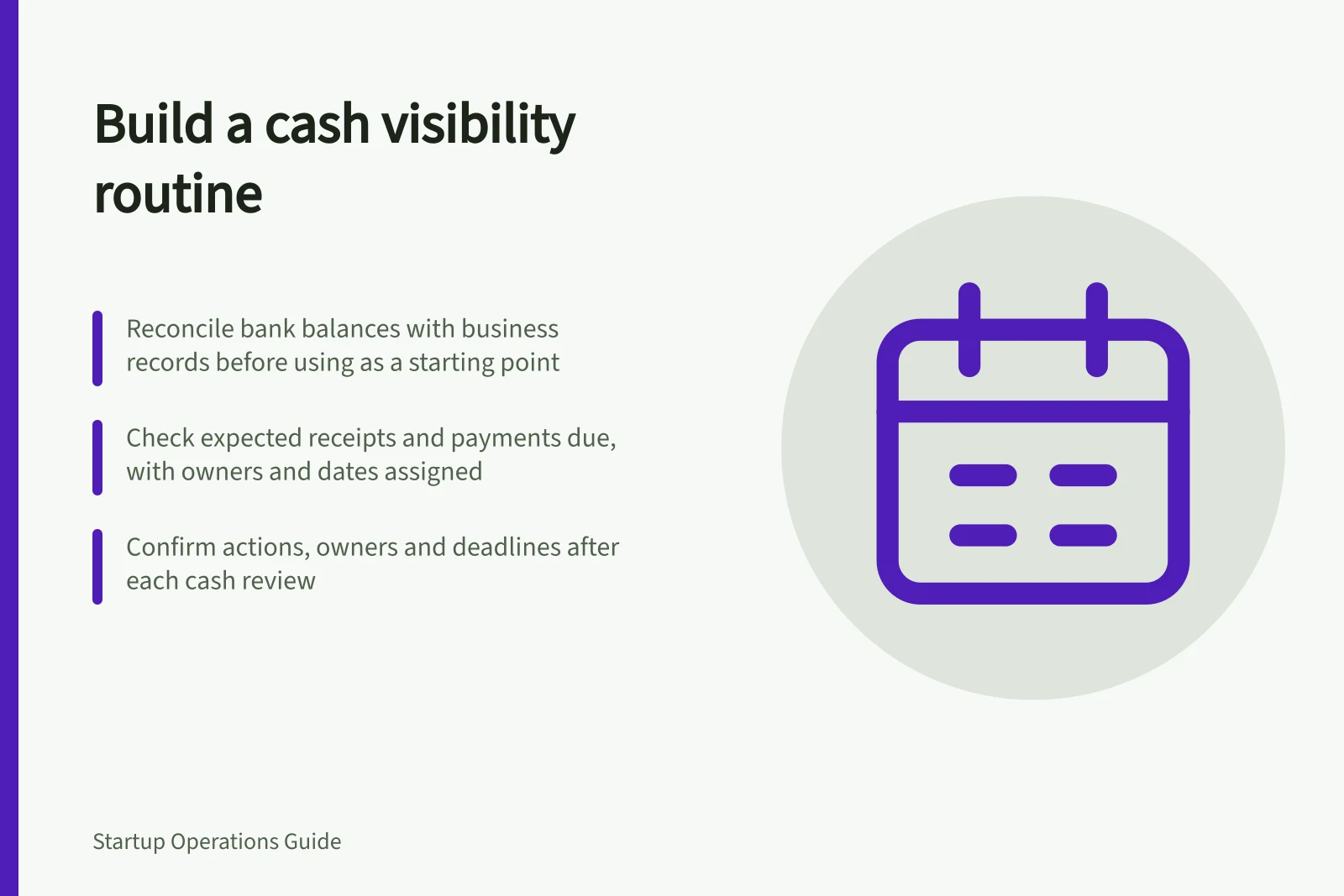
List the included bank accounts and the balance date. Reconcile recent movements with the business's records before using the balance as a starting point. A transfer between included accounts is not new income. Identify any balance that cannot be used for general payments.
List unpaid receipts by expected arrival date, amount and confidence. Keep money already received in the opening balance; do not add it again. For an unpaid invoice, note the customer, agreed terms, latest information and collection owner. Keep speculative sales separate from receipts the business has a sound basis to expect.
Collect outgoing payments from invoices, payroll records, agreements and approved purchases. Include applicable tax and superannuation payments, with amounts and due dates checked by the responsible person. The cash view draws on these records; it does not replace them.
Cash Flow Snapshot Summary
- Total Available Cash (as of balance date)
- To be filled from reconciliation
- Unpaid Receipts by Date (Total Expected)
- To be calculated from customer invoices
- Payments Due Before Next Review
- To be listed with due dates and amounts
- GST & Superannuation Payments Due
- Checked and confirmed by responsible person
Use the same short check each time
Choose a review interval that fits the business's payment pattern, with an extra check when a large receipt or payment is imminent. Ask:
- What cash has arrived or left since the last view?
- Which expected amount or date has changed?
- Can available cash cover each payment due before the next review?
- Which uncertain receipt matters most to that answer?
- What follow-up or decision is needed, and who owns it?
Date the view and note when material inputs were last checked. A simple table that shows an uncertain receipt honestly is more useful than a polished one built from stale dates.
Investigate differences
Compare the prior forecast with actual cash movements. If a customer paid late, confirm the latest information and decide whether follow-up is needed. If a supplier payment was larger than expected, establish whether timing, a missing cost or an error caused it. Update future periods only after recording what changed.
Keep a dated snapshot of the earlier view. It can reveal recurring late receipts or omitted payments and make the next forecast more realistic.
Suppose a customer receipt expected before payroll has not arrived. Show it as outstanding, check cash available for payments due before another plausible receipt, and give the collection follow-up an owner. Do not enter an unsupported revised payment date as though the customer confirmed it.
Close with an action
Record the action, owner and due point for each material issue. Escalate a projected inability to meet a payment promptly to the people authorised to act, and seek qualified advice where needed. Another founder should be able to open the dated view and tell what is received, what remains an estimate and what happens next.
Cash Visibility Routine Workflow
- Reconcile bank balances and record opening cash
- Identify unpaid receipts and assign collection owners
- List upcoming payments including tax and super
- Compare forecast vs actual; investigate variances
- Record actions, owners, and due dates