Operating Cadence
Part of Startup vendor operations
Planning continuity when a key vendor fails
Plan a practical first response when a critical startup supplier fails, including backup, owner and customer communication.
A backup supplier name is not a continuity plan if nobody knows whether it can deliver, access the data or meet the specification. Plan the first practical decisions for the vendors whose loss would interrupt a customer promise.
Describe the failure you need to survive
Choose a concrete scenario: payment service unavailable, sole packaging supplier unable to deliver or a hosted system inaccessible. Record the business activity affected, how long it can pause, the earliest warning sign and who can declare an incident.
business.gov.au’s emergency-planning guidance recommends identifying important products and services and a backup when arrangements fail.
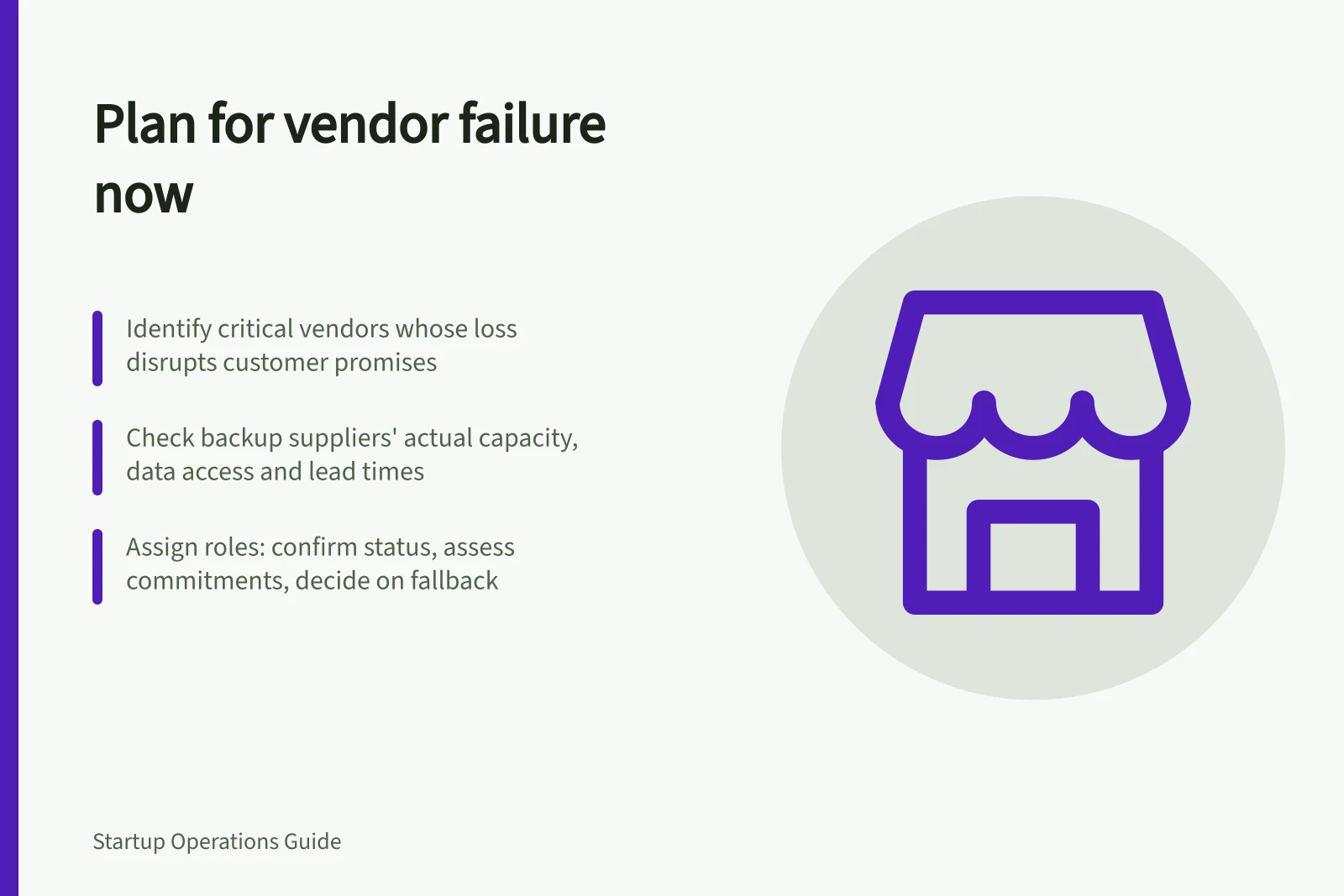
For each critical vendor, check contract contacts and escalation routes, remaining inventory or manual capacity, data-export arrangements, replacement lead time and any approvals needed to switch. A nominal alternative may be unusable if it needs weeks of onboarding. Test the most important assumption where practical, and label an untested fallback as such.
Key Elements of a Vendor Continuity Plan
- Critical vendor scenarios to plan for
- Payment service down, sole packaging supplier fails, hosted system inaccessible
- Average lead time to onboard a backup supplier
- Varies; some may require weeks
- Recommended action: test key assumptions
- Where practical, validate backup supplier capabilities
- Primary source for emergency planning guidance
- business.gov.au
Sequence the response
Assign one person to confirm the vendor status and expected recovery, another to assess customer commitments, and an owner for the backup decision. Decide when to pause new sales or revise delivery promises. Communicate what is confirmed, what is uncertain and when the next update will arrive. Avoid promising that a supplier will recover before it has confirmed the fact.
After the event or test, record what failed in the plan and update vendor records, stock buffers or contract terms.